Free self-assessment · No email required
Two honest questions decide almost everything: does your property physically support an ADU, and does an ADU actually serve what you’re trying to accomplish? Walk this checklist in a few minutes and you’ll know where you stand — no form, no sales pitch, just a clear read on your own property.
Free · No obligation · Talk to a real ADU specialist
How to use this
Most homeowners jump straight to cost. That’s the wrong place to start. The two questions that actually determine whether you should build are simpler — and answering them first keeps you from overbuilding, underbuilding, or chasing a project that was never a fit.
Does your property physically support one? Five factors decide it — and most lots pass more of them than owners expect.
Does an ADU serve your actual goal? The right type depends entirely on what you’re trying to accomplish.
The reassuring part: roughly 80–90% of the “will my lot work?” question can be answered in a short feasibility review — often before you spend a dollar.
Part 1 · Physical fit
Five factors. Check the ones that describe your property — you may be surprised how many you can tick right now.
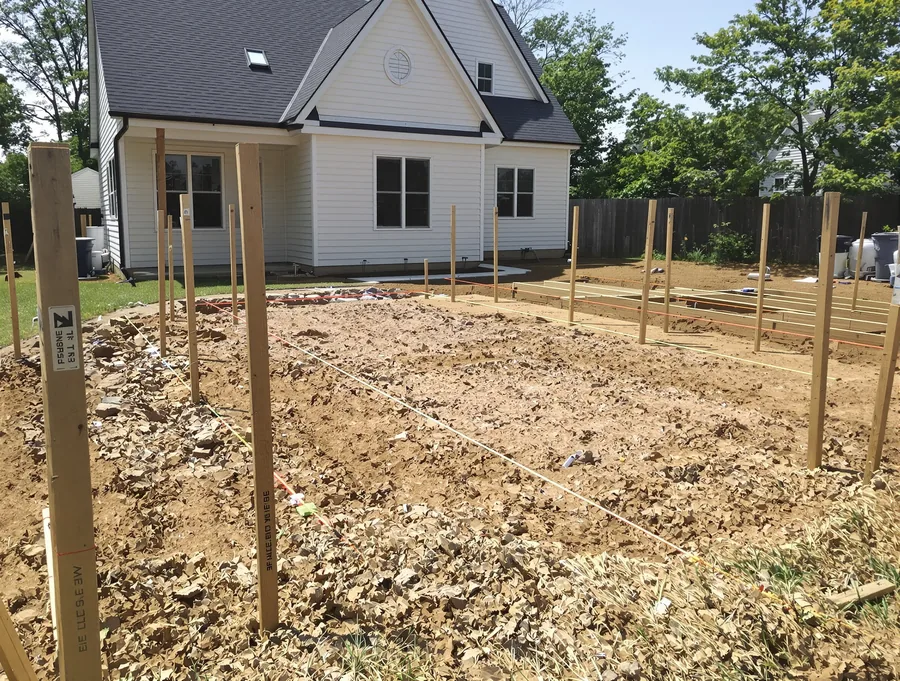
The real question isn’t how big your lot is — it’s how much usable space is left after the required distances from your property lines. Those setbacks are smaller than most people assume, so even modest lots often leave plenty of room for a real, livable home.
Check yes if: You have open yard, a driveway, or an underused corner that isn’t right on the property line.
A detached garage, an oversized carport, or a rarely-used storage space is a head start. Converting what’s already standing is frequently the lowest-cost ADU on the block — you’re paying to finish a shell, not build one from the ground up.
Check yes if: You have a garage or outbuilding you’d happily give up for living space.
Where your water, sewer, and electrical lines run affects the price of connecting a new unit — a shorter, simpler run costs less than a long trench across the yard. It’s a line item to plan for, not a dealbreaker. Almost every lot can be connected.
Check yes if: You know roughly where your main panel and sewer cleanout are (or can find out).
Can a crew and their equipment reach the build area? Clear side-yard or backyard access keeps more construction methods on the table and holds costs down. Tight access doesn’t stop a project — it just shapes how the unit gets built and delivered.
Check yes if: There’s a path to the backyard, or the build area is reachable from the street.
Here’s the good news: most residential zones allow ADUs by state law, and cities can no longer impose many of the old barriers. Local specifics — height limits, fire zones, historic overlays — shape what’s possible, but rarely close the door entirely.
Check yes if: Your home sits on a standard residential lot (single-family or multi-family).
Checked most of these? Your lot is very likely a fit. Checked only a couple? It still might work — the exceptions and workarounds are exactly what a feasibility review sorts out.
Part 2 · Goal fit
A lot can support an ADU and still be the wrong project — if the type doesn’t match the goal. Find the row that sounds like you.
A detached unit or a garage conversion with its own private entrance rents fastest and commands the strongest rent. Tenants want to feel like they have their own home, not a room in yours — separation is what drives rentability and keeps it occupied.
Best fit: Detached ADU or garage conversion with a private entrance.
For aging parents or an adult child, prioritize single-level access, real privacy, and a layout that lives like a genuine home — not an add-on. The goal is closeness with independence: family nearby, but everyone with their own front door.
Best fit: Single-level, accessible layout with privacy built in.
If you need dedicated space to work or create, a smaller attached ADU or a Junior ADU carved from existing square footage is usually the fastest and most affordable route. You get separation from the house without the cost of a full detached build.
Best fit: Smaller attached ADU or a JADU inside your current footprint.
Building primarily for resale and equity? Think about layout flexibility and finishes that appraise well. A well-proportioned, full-featured unit reads closer to a small home than a bonus room — and that’s what shows up in the appraisal and the buyer pool.
Best fit: Flexible layout, quality finishes, full-home feel.
Take it with you
The same checklist, formatted to print on a single page. Take it out to the backyard, tick the boxes, and jot notes on your setbacks, access, and existing structures — then bring it to your feasibility review.
Keep going
Ready your answer, then go deeper — each of these is a free, no-signup resource.
Questions
Still have a question? Ask us during your free consultation.
There’s no single square-footage minimum — what matters is how much usable space remains after your required setbacks (the distance a structure has to sit from each property line). Those setbacks are typically just a few feet, so a surprising number of standard California lots qualify. And if open yard is tight, a garage conversion or a Junior ADU uses space you already have. A short feasibility review can answer this for your specific parcel in minutes.
Rarely. Connecting a new unit to water, sewer, and electrical is almost always possible — the variable is cost, which depends on how far and how complex the connection runs are. A garage that sits near your main house and panel is inexpensive to connect; a far corner of a large lot costs more because of the longer trenching. It’s a budget line to plan for, not a reason a project can’t happen.
Yes — legally it’s identical to any other ADU, with its own kitchen, bathroom, and entrance. It’s often the smartest value on the block because you’re finishing an existing structure instead of building one from scratch, which usually means lower cost and faster permitting. If you have a garage you don’t rely on for parking, it’s one of the strongest starting points there is.
For maximizing rent and keeping the unit occupied, prioritize privacy and a separate entrance — a detached ADU or a garage conversion with its own door typically performs best. Tenants pay for the feeling of their own home. An attached unit can still rent well, but make sure it has genuine separation (private entry, sound isolation) so it doesn’t feel like a room inside your house.
Start by naming the goal in one sentence — rental income, housing a family member, workspace, or long-term value — because the goal determines the type, and the type determines the budget. From there, a free feasibility review confirms whether your lot supports the right unit for that goal. Getting the order right (goal → type → lot → budget) is what keeps people from overbuilding or building the wrong thing.
No pressure, just clarity
A free feasibility review turns this checklist into specifics: whether your property supports an ADU, which type fits your goal, and what to plan for. No obligation — just the clearest 30 minutes you’ll spend on your ADU.