Start here · ADU Basics
Every website says something different, and almost none of it is written for a normal homeowner. So before you think about cost, financing, or design, here’s a clean, jargon-free foundation. In five minutes you’ll understand ADUs better than 90% of the people researching them right now.
Free · No obligation · Talk to a real ADU specialist
What it is
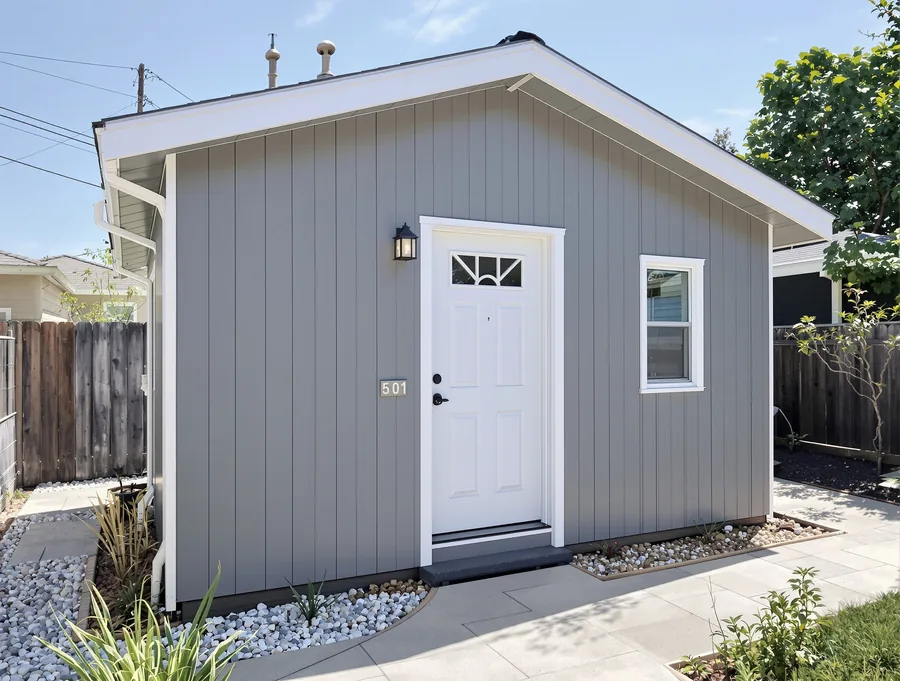
ADU stands for Accessory Dwelling Unit — a second, smaller, fully independent home on the same lot as your main house, with its own kitchen, bathroom, and entrance. You may know it by another name:
The key word is independent. It’s not a bedroom, a bonus room, or a she-shed — it’s a complete, self-contained home that someone could live in, rent out, or grow old in.
The 5 types
There’s no “best” ADU — only the right one for your lot and your goal.
A standalone home in your backyard, fully separate from your house. Maximum privacy and the strongest rental appeal — the classic backyard cottage or granny flat.
Best for: Rental income · family with real separation
Shares one wall with your existing home. It piggybacks on your current structure, which often makes it more affordable than a from-scratch detached build.
Best for: Budget-conscious · smaller lots
Turn an existing garage into a legal living unit. Frequently the lowest-cost, fastest-permitting path — and yes, it is a fully “real” ADU under California law.
Best for: Fastest ROI · lowest cost
Up to 500 sq ft carved out within your existing home—often a converted bedroom with its own entrance and kitchenette. The quickest and cheapest way in.
Best for: Family · home office · fastest path
Build up instead of out. You gain full square footage without giving up your yard—ideal when lot space is tight but you still want a real, spacious home.
Best for: Tight lots · keep the backyard
What changed
Over the last few years, California passed a wave of laws specifically to encourage ADUs and remove the old roadblocks. Cities can no longer impose many of the barriers that used to quietly kill these projects — things like excessive parking rules, oversized setbacks, and owner-occupancy requirements.
The practical result: on most residential lots, an ADU isn’t just possible — it’s explicitly protected by state law. That single shift is why hundreds of thousands of California homeowners are building them right now.
Myth-busting
“You need a huge lot.”
Usually false. Many ADUs fit comfortably on standard California lots, and garage conversions use space you already have.
“The city will never approve it.”
State law streamlined approvals across California. Outright denials are far rarer than most homeowners fear.
“You need all cash.”
False. Most homeowners finance an ADU by tapping equity they already have—HELOC, cash-out refi, construction and specialty ADU loans.
“A garage conversion isn’t a real ADU.”
It absolutely is—legally identical—and it’s often the smartest value on the block.
“It won’t add real value.”
A quality ADU can add both monthly income and long-term equity—closer to a small rental property than a remodel.
Keep going
Now that you’ve got the foundation, go as deep as you like — each of these is a free, no-signup resource.
Questions
Still have a question? Ask us during your free consultation.
An ADU (Accessory Dwelling Unit) is a second, smaller, fully independent home on the same lot as your main house—with its own kitchen, bathroom, and entrance. You may know it as a granny flat, in-law suite, backyard cottage, or garage apartment. The defining word is independent: it’s a complete, self-contained home.
Five common types: detached (standalone backyard home), attached (shares a wall with your house), garage conversion (an existing garage turned into a unit), junior ADU or JADU (up to 500 sq ft carved out within your home), and two-story / above-garage (building up to save yard space). The right one depends on your lot and your goal.
Yes. Over the last several years California passed laws specifically to encourage ADUs and remove old roadblocks. On most residential lots an ADU isn’t just possible—it’s explicitly protected by state law, and cities can no longer impose many of the barriers that used to kill these projects.
No. Many ADUs fit standard California lots, and a garage conversion or junior ADU uses space you already have. A short feasibility review can tell you in minutes whether your specific lot works.
Costs vary by type, size, and finish level—see our budget worksheet for the full breakdown. And you don’t need cash: most homeowners finance an ADU by tapping existing equity. Our financing guide walks through all six paths.
No pressure, just clarity
A free consultation replaces every “it depends” with a specific answer for your property, your goals, and your numbers. No obligation — just the clearest 30 minutes you’ll spend on your ADU.